

Time travel doesn't always have to entail sci-fi
gimmicks and fancy technology, especially if you happen to visit Greenfield
Village in Dearborn, Michigan.
The 80-acre village started as an idea in the mind
of Henry Ford to showcase his vast collection of Americana and show how
Americans through the years worked and played. The emphasis here, predictably
enough, focuses on the idea of American progress--how technology changed, and
changed the country, during the Industrial Revolution and beyond.
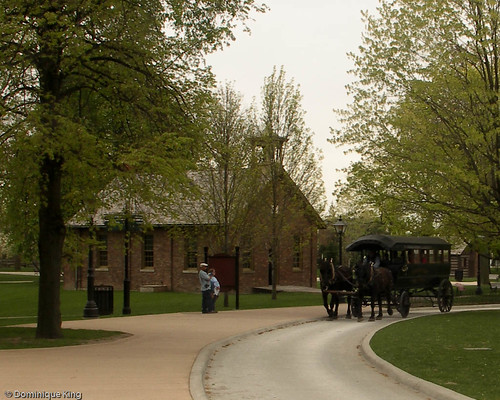
Ford's beliefs and biases determined much of the
early development at Greenfield Village and the indoor Henry Ford Museum on the
same campus. That means that the village and museum, like other museums
offering "recreated" historic environments I've visited, offer
visitors a somewhat candy-coated version of history. Greenfield Village and
Henry Ford Museum have made some strides in recent years toward offering a more
balanced view of some of the stories presented at the institutions--most
notably exhibits related to the African-American experience in America.
Ford began collecting historic objects in the early
1900s. Ford definitely seemed like a guy with big ideas, so it doesn't surprise
me that he began collecting big things--like buildings, trains, and large
machinery. Ford worked to plan a themed historical village in Sudbury,
Massachusetts, in the early 1920s. Ford's idea didn't take root in
Massachusetts at that time, and he began planning his project for a site in
Dearborn, Michigan.
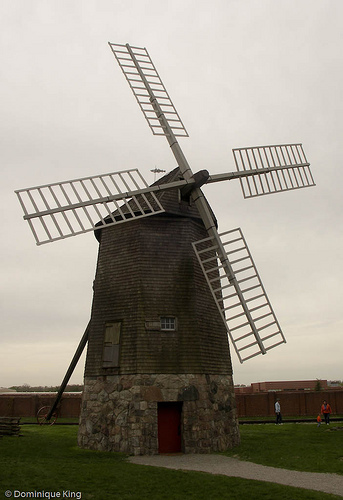
Ford built the village in the late 1920s, dedicating
the complex on October 21, 1929--mere days ahead of the catastrophic Stock
Market Crash of 1929. The dedication date was the 50th anniversary of the
incandescent light, developed by Ford's good friend Thomas A. Edison. President
Herbert Hoover and Edison dedicated the project, but it took four more years
for the Edison Institute complex to open to the public.
Initially, the village consisted of relocated or
reconstructed buildings from throughout the United States that Ford felt
important in telling America's story. Birthplaces, homes or workplaces of Ford,
Edison, Luther Burbank, and Wilbur and Orville Wright--many of them men who
Ford admired and/or knew as personal friends--were among the structures Ford
included in the collection. Today, the village has more than 80 restored
historic structures.
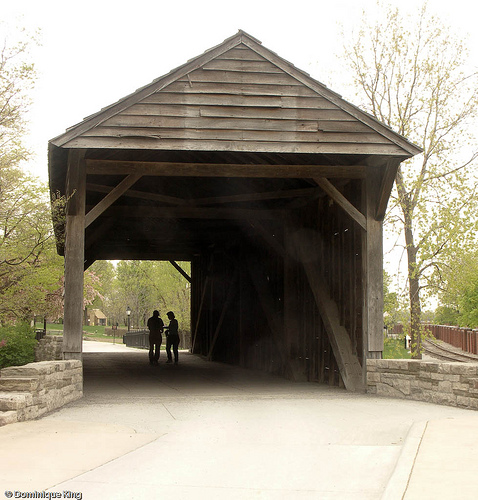
The village set a precedent for open-air museums and
inspired and influenced historic preservation elsewhere. The complex earned designation
as a National Historic Landmark on December 21, 1981.
Today, the Edison Institute is the largest
indoor-outdoor history museum campus in the United States. Visitors can stroll
through the village and tour homes, but there is so much more to do at
Greenfield Village.
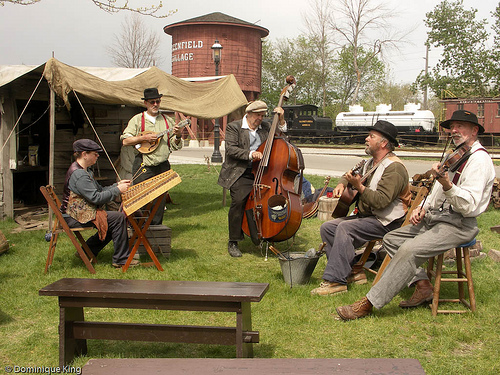
Special weekend events like classic car shows and
historic reenactments where you might see a Civil War battlefield encampment, ride
Thomas the Tank Engine, or catch a vintage 1860s baseball game with the
village's own Lah-De-Dahs team happen throughout the season. Visitors can tour
the village via a variety of vehicles, like taking a three-mile ride on
open-air railroad cars drawn by a vintage steam locomotive or touring the town
in a chauffeur-driven restored Model T car. Kids of all ages can hop aboard the
village's 1913-era carousel that features horses, chickens, cats, dogs and
frogs.
We particularly enjoy eating a meal at the village's
Eagle Tavern, where costumed wait staff serves meals from an 1850s menu of fare
in a restored 1831 stagecoach stop that originally stood in Clinton, Michigan. We
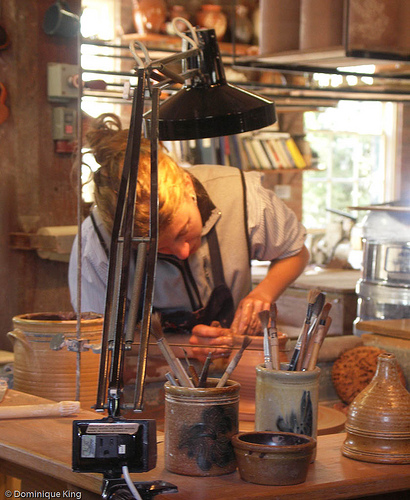
also enjoy visiting the Liberty Craftworks district to see artisans at work,
using traditional methods to make many of the gifts that end up in Greenfield Village
and Henry Ford Museum stores.
Greenfield Village is open seven days a week from
mid-April through early November, and weekends from early November through late
December. Out-of-town visitors should realize that visiting the village is an
all-day proposition, and that single-day admission is pricey enough that
purchasing a membership good for both the village and museum may make far more
sense if you plan to visit multiple times in a given year.
We like having a membership so we can dash in for a couple of hours if we wish to just see a special exhibit, take a few photos or take a nice walk and have lunch.
© Dominique King 2009 All rights reserved









I remember going here in my teens which is a heck of a long time ago. The one thing I do remember is how fantastic it was. What a neat place.
Being a Kennedy assassination freak I found out the Lincoln he rode in that tragic day is apparently there. I'm told it doesn't look the same but is the genuine article.
Steve
Posted by: Steve Davis | October 06, 2009 at 09:31 AM
Steve-Greenfield Village and The Henry Ford Museum are both pretty fantastic--we're lucky to live so close and be able to go as often as we do.
The Kennedy car is in the indoor museum. I understand some of the protective features like bulletproof glass and some armored plates were added after the assassination.
Posted by: Dominique | October 07, 2009 at 08:18 PM
An awesome slice of Americana that I never knew existed in Michigan. It looks like a great place to visit. Thanks for the write-up!
Posted by: Peter West Carey | October 08, 2009 at 08:36 AM
Peter-Greenfield Village and Henry Ford Museum are definite must-dos if you're anywhere near here. I've used shots from both the village and the museum for Photo Friday posts in the past, but realized I hadn't done a full story about either one for the blog before now--which means I'll probably do a full post about The Henry
Ford somewhere along the way, too. The campus also includes an IMAX theater (last flick we saw there was a U2 concert film, which I loved) and the Rouge plant (which we've yet to get over to tour).
Posted by: Dominique | October 08, 2009 at 09:16 PM